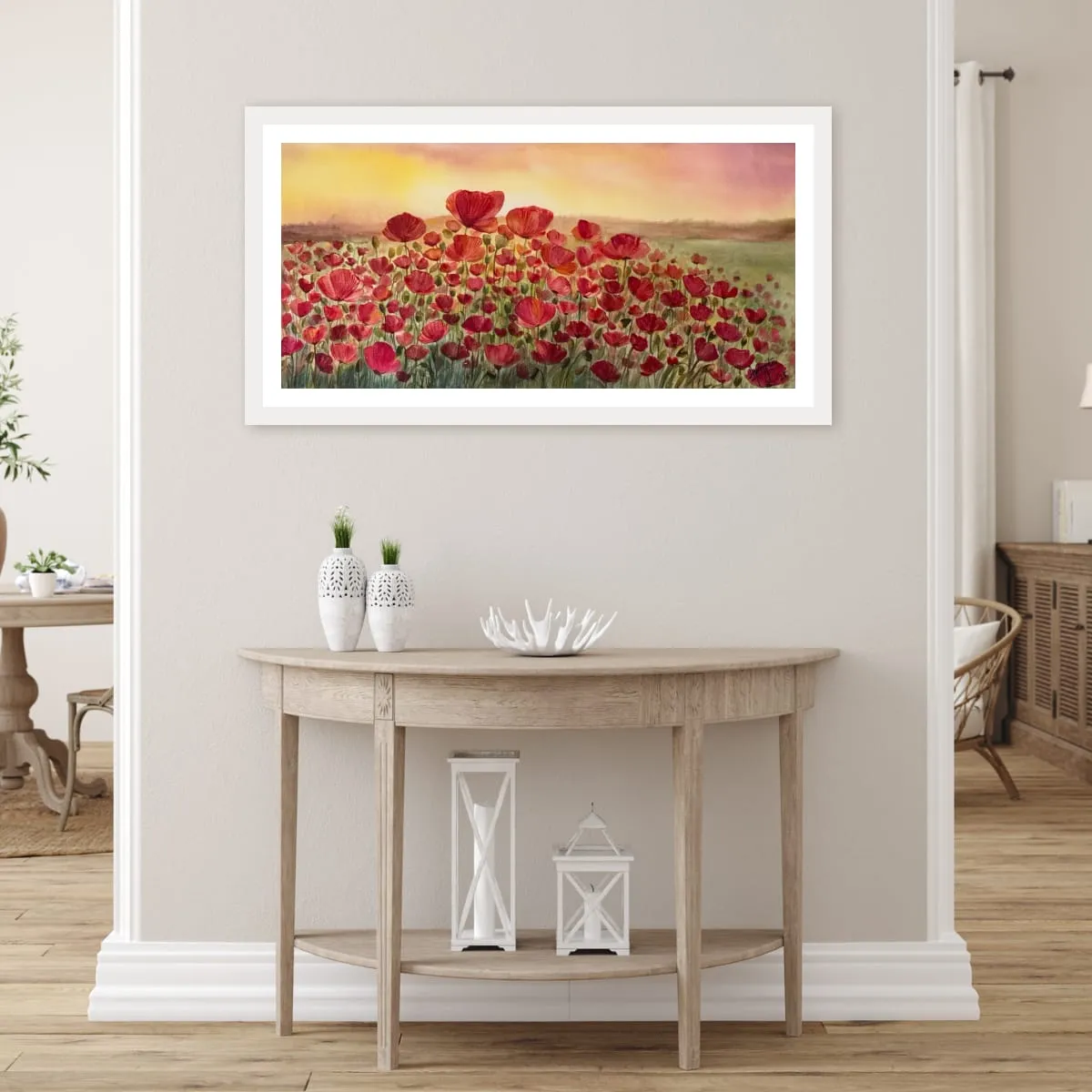
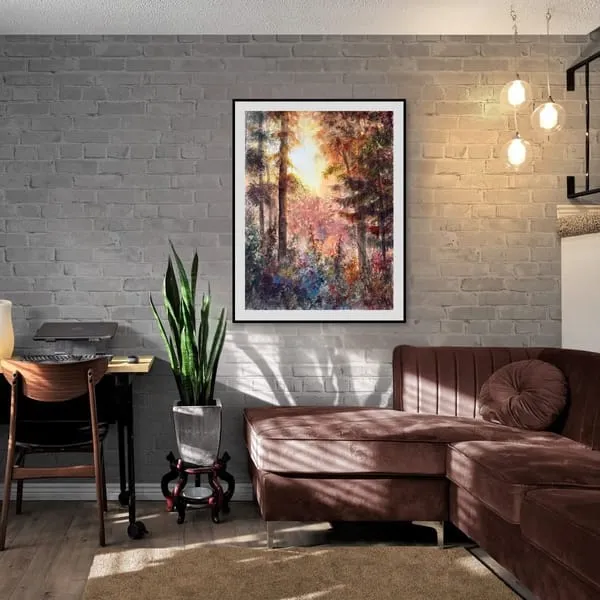
How to Choose Large Abstract Art for Your Living Room
“A large abstract painting can anchor a living room. Use wall measurements, color relationships, and composition to find one that feels right.”

A large abstract painting can give a living room a center of gravity. It can also feel imposing if the scale, palette, or movement is wrong for the space. Before choosing by dimensions alone, decide what you want the painting to do: calm the room, add energy, or pull together colors that are already there. Then browse the available original artworks with those intentions in mind.
Start with the wall and the viewing distance
Measure the wall, including the furniture beneath it, and note where people usually sit. A painting viewed from across a room needs a composition that reads at a distance. Subtle marks and layered details may be more rewarding up close, while large shapes and clear movement often hold their presence across a wider space.
Use the listed dimensions rather than judging from a product photo. If you are considering a work above a sofa, mark its width on the wall with painter's tape. Our guide to choosing artwork size above a sofa walks through that decision.
Read the composition, not just the colors
Color gets attention first, but composition determines where the eye travels. Look for the painting's strongest shapes, areas of contrast, and quieter passages. A work with a clear focal area can organize a busy room. A more evenly balanced composition may suit a space where you want the art to feel present without dominating.
Abstract art does not need to match the room literally. Pick up one undertone or introduce a considered contrast. In a neutral interior, a strong color can become the point of focus; if you prefer a softer shift, see how to add color to a neutral living room.
Turn away from the screen for a moment, then look again. Where does your eye land first? Does the painting pull you across the surface, hold you in one area, or create a quieter field? That visual movement is what you will experience every day, long after the first color match has stopped feeling new.
Make sure “large” still leaves the room space to breathe
Large art should feel intentional, not crowded. Leave visible wall around the work and consider nearby doors, lamps, windows, and shelves. If the room already has patterned textiles or several focal points, a quieter painting may settle the composition. If the furniture and walls are simple, more movement can bring needed energy.
Check how the work relates to the full seating area, not just the empty rectangle of wall. A large painting may be visually balanced but physically impractical if a swing-arm lamp crosses it or a door opens toward it. Measure the route into the room as well as the wall, especially for a stretched canvas that cannot be rolled.
Look for surface, edge, and installation details
Abstract work often depends on layers, texture, sheen, or subtle shifts that a single front-facing photograph cannot show. Look for angled details and close views. Ask whether textured areas project from the surface and whether the work needs glazing, a frame, or extra protection from direct light.
Check whether the dimensions include a frame, how deep the canvas or panel is, whether the edges are painted, and what hanging hardware is supplied. For a heavy work, use hardware rated for the piece and the wall type. Professional installation is sensible when the size, weight, or position makes hanging uncertain.
Buy the actual work, not an imagined version
Before purchasing, check whether the listing is for an original or a print, what the dimensions include, which medium and surface were used, and whether framing is included. Look at the artwork from different views if available, and ask the artist about any detail you cannot confirm. This buyer guide to original art covers the questions worth asking.
Do not assume every expressive landscape is abstract or every nonrepresentational work is bold. Read the artist's description and respond to the actual painting rather than the category alone. The best choice is the work whose structure and presence continue to hold your attention at the scale you need.
If you know the mood and scale you want but need a painting made for your space, learn about commissioning artwork. If not, see the available paintings and compare how each composition feels at the size listed.