How to Buy Art for Your Home: Choosing an Original You Will Love
“Buying art gets easier when you start with what moves you, then check the details that matter. Use this guide to choose an original artwork with confidence.”

You can love a painting on a screen and still hesitate when it is time to bring it home. Will it feel right above the sofa? Is it an original or a print? Does the size work, and what happens after you pay?
Those are good questions. Buying art is personal, but the decision does not have to feel mysterious. Start with the feeling you want to live with, then check a few practical details before you choose. If you are ready to look, browse the available original artworks as you read.
Begin with the feeling, not the furniture
It is tempting to search for a painting that matches the exact shade of a cushion. That can make the room feel coordinated, but it can also leave you with a piece you only chose because it fit the palette.
Instead, notice what you keep returning to. Do you pause for quiet landscapes, energetic color, soft movement, or a familiar place seen differently? The artwork should have a reason to stay interesting after the room has changed around it.
Think about the mood you want the room to hold. A calm, open landscape can give a busy space a visual pause. A painting with strong movement or contrast can bring energy to a pared-back room. You do not need to match every color. One repeated tone, a related texture, or a shared sense of warmth is often enough to make the art feel at home.
Look through Aprajita Lal's available works by subject and color. Save the pieces that make you stop, then ask what they have in common. That small exercise can tell you more about your taste than trying to name a style first.
Measure the wall before you fall for a size
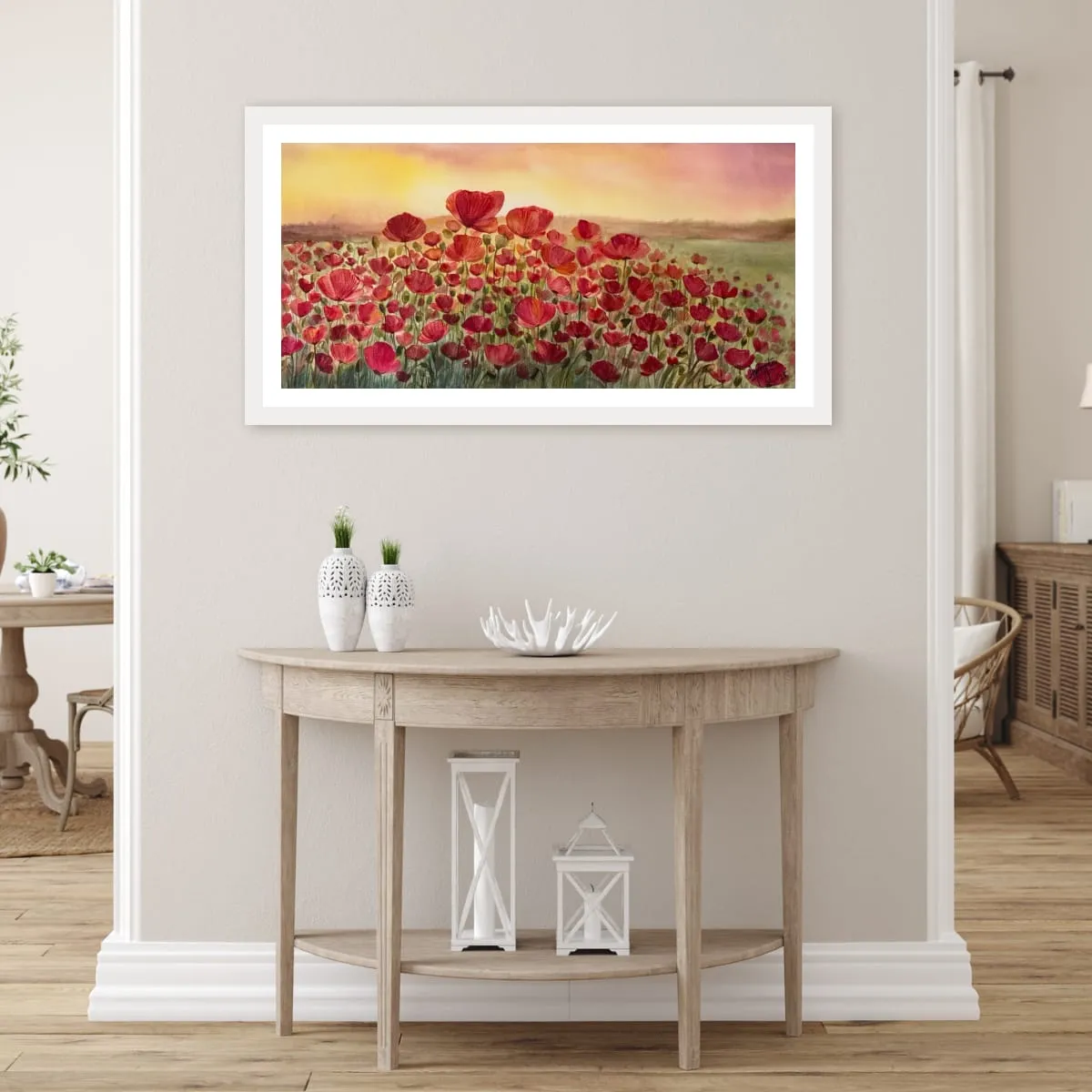
Scale changes the way a painting feels. A piece that looks substantial in a product image may appear small above a long sofa. A compact work can feel just right in a reading corner, hallway, or beside a desk.
Measure the wall area you want to fill, including the furniture below it. For a piece above a sofa or console, compare the artwork's width with the furniture and leave visible space around the composition. There is no single ratio that works in every room. The point is to picture the actual footprint before ordering.
Use the listed dimensions, not the proportions in a cropped image. Check whether the measurements describe the canvas alone or include a frame. If you are deciding between sizes, mark each option on the wall with painter's tape. Stand back from the usual viewing spot and see which outline feels balanced.
Know exactly what you are buying
“Art” can mean a one-of-a-kind painting, a numbered limited edition, or an open edition print. These are different objects, so the listing should make the format clear.
An original is the artwork created by the artist. A limited edition is a set number of reproductions or editions, while an open edition can be reproduced without a stated limit. Neither format is automatically the right choice for everyone. Choose the one that fits your connection to the work, the space, and your budget.
Before you buy, look for the medium, surface, dimensions, framing details, and whether the work is an original or an edition. If a detail is missing, ask before checkout. You can also explore limited edition artworks if you want to compare formats.
If you are thinking beyond one piece, read how to build your first art collection for advice on choosing works that feel connected over time.
Check the artist and the details behind the listing
Buying directly from an artist can make the work's story and making process easier to understand. Read the artist's bio, look at more than one finished piece, and see whether the artwork's description tells you how it was made. Meet Aprajita Lal and learn about her contemporary practice before choosing a piece.
The listing should answer practical questions clearly: what is included, how the artwork will be packed, where it ships from, how long dispatch may take, and what the return policy covers. Confirm whether a frame is included. For a one-of-a-kind work, ask how the piece is identified or documented if that information is not already provided.
Keep your order confirmation and artwork details together after purchase. They are useful for care, insurance records, and remembering the artist and title years later.
Set a budget that includes the whole purchase
The listed price is only one part of the decision. Depending on the work, you may also need to account for framing, delivery, installation, or import charges. Check the final total and delivery terms before you place an order.
It can help to set a comfortable range before browsing, while leaving a little room for the piece that feels unusually right. You do not need to buy the most expensive work to make a meaningful choice. If an original is outside your current budget, compare smaller works or limited editions rather than choosing a piece you feel uncertain about.
If you are drawn to a particular idea, color story, or scale but have not found the right finished work, ask about a commissioned painting. A commission lets you discuss a new piece with the artist before deciding whether to proceed.
Ask the questions you need answered
There is no prize for checking out quickly. A thoughtful seller will help you understand the artwork and the purchase. Before ordering, ask:
- Is this a one-of-a-kind original, a limited edition, or an open edition?
- What medium and surface were used?
- What are the exact dimensions, and is the frame included?
- How will the artwork be packed and shipped?
- What is the expected dispatch time?
- What is the return policy if the artwork is not right for my space?
- Is any certificate or documentation included?
If you still have a question, contact the studio before buying. A quick answer can help you decide with more confidence than another hour of comparing tabs.
Choose the piece you want to keep seeing
The strongest reason to buy a painting is that you want it in your life. Practical details help you make that choice clearly, but they cannot tell you which image will matter to you a year from now.
Return to the pieces you saved. Imagine seeing one during an ordinary morning, not only while decorating. If it still draws you in, the scale fits, and the listing answers your questions, you have a solid basis for deciding.
Explore the available original artworks, or download the Collector's Guide for more help choosing and caring for art.