What Is Commissioned Artwork? Process, Pricing, and What to Expect
“A commissioned painting is made through a conversation between you and an artist. Learn what to discuss, how the process works, and what to confirm before you begin.”
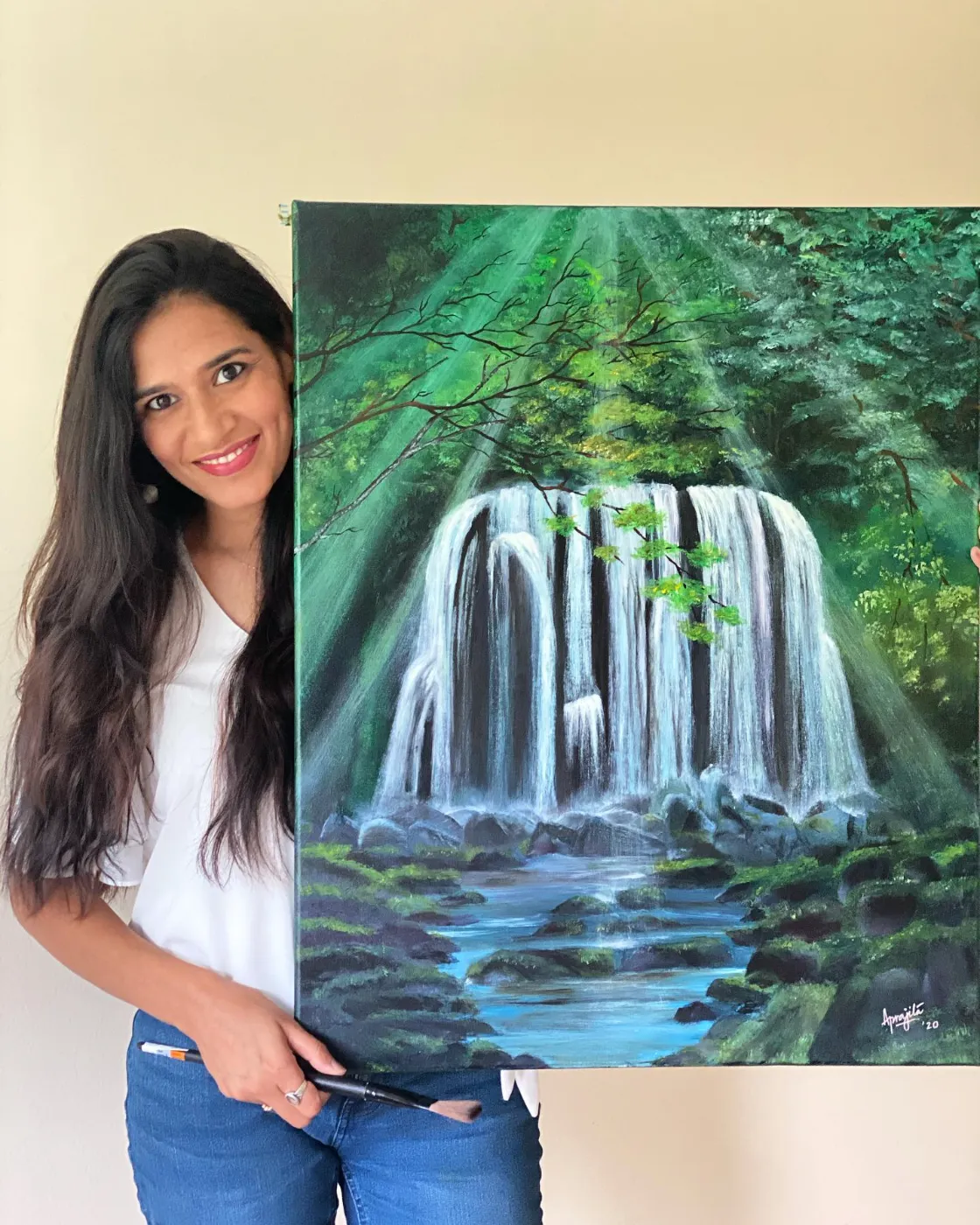
You have a wall in mind, perhaps a color you keep returning to, but no existing painting feels quite right. Commissioned artwork gives you a way to discuss a new piece with an artist before deciding whether to proceed. It is a collaboration, not a promise that a painting will reproduce a reference image exactly. If you are considering a piece for your home, you can ask Aprajita Lal about a commission or compare the process with available original paintings.
What happens before the painting begins
The first conversation is about fit. Share the space, approximate dimensions, colors you are drawn to, the mood you hope the work will bring, and any subject or place that matters to you. Reference photos can help explain light or atmosphere, but they should clarify the brief rather than prescribe every mark.
The artist can then tell you whether the idea suits their practice, what size or medium may work, and what information is needed for a proposal. It is reasonable to discuss the expected timeline and the number of decisions or progress updates before work begins.
A typical process may include an inquiry, a conversation or written brief, a proposal, a deposit, creation, agreed progress updates, final payment, and delivery. The exact sequence varies by artist. Ask which stages apply before you commit, especially if the work is tied to a move, anniversary, or installation date.
What affects the price
There is no universal commission price. Size, materials, complexity, preparation, and the artist's time all matter. Ask what the quoted price includes. Confirm whether framing, shipping, taxes, and any other costs are separate. A clear written proposal should describe the artwork, dimensions, medium, price, payment schedule, expected timeline, and what happens if the project changes or is paused.
Avoid assuming that a commission costs the same as a similarly sized available painting. The process includes planning and communication specific to your request. For general buying considerations, see how to buy art for your home.
Agree on the important details in writing
Before paying a deposit, make sure you understand the scope and terms. Ask how revisions are handled, whether a deposit is refundable, when the balance is due, and how delivery will work. Also confirm who arranges framing and what rights you receive. Buying the physical painting does not automatically transfer copyright or reproduction rights.
A commission should still feel like the artist's work. Share what matters most and stay open to the artist's interpretation. If you need an exact replica of another artwork or a guaranteed match to a paint chip, discuss that early because it may not be a suitable commission brief.
Also ask what happens if the final work differs from what you pictured. Some artists allow feedback at defined stages; others make the artistic decisions after the brief is approved. Unlimited revisions are unusual and can turn a commission into a different project. The agreement should make the review points and limits clear.
Plan for framing, delivery, and installation
The finished painting still needs to reach the wall safely. Confirm whether it will arrive framed, ready to hang, rolled, or stretched. Ask who arranges shipping, whether insurance is included, and how damage should be reported. For an unusually large or heavy work, discuss access through doors and stairways before the artist commits to the dimensions.
Buying the physical artwork does not normally give the buyer copyright or unrestricted reproduction rights unless the written agreement says so. If you want to reproduce the image for invitations, a business, merchandise, or publication, raise that separately before signing.
Decide whether a commission is the right route
Commissioning makes sense when you have a meaningful direction and want to collaborate on a new piece. If you are still discovering your taste, it may be easier to begin with an existing original. You can explore available artworks, compare originals and prints, and return to the commission conversation when your idea is clearer.
The best first step is a thoughtful inquiry. Describe the room and the feeling you want the painting to hold, then ask what is possible. Contact the studio about a commission to begin that conversation.